
SENTIMENTAL VALUE's ode to the home
see also: joachim trier makes me cry again

Early in 2021, I placed a large order from one of my favorite bookstores in New York—they were having some sort of sale and, given the peak Covid of it all, gently and desperately begging people to buy books so they could remain in business. I succumb to this sort of plea quite happily, which is why when I visited my parents in California that summer, I still had a not insignificant stack of novels to get through. The years pass and I never learn not to underpack clothes and overpack books.
Anyway, one of those books was Jenny Erpenbeck’s Visitation, translated by Susan Bernofsky. The author’s popular Kairos had only just recently been released in its original German and would not be translated until 2023, so I knew all of Nothing™ about Erpenbeck or her style. Really, I’d only added Visitation to my cart because it was a staff recommendation—something else I can never resist.
The slim novel, which I read mostly on the couch as my parents’ then-new dog napped on my lap, told the story of a house in the countryside, just outside of Berlin.

That’s a simplified way of looking at Visitation, sure, but simple is good, sometimes. It’s the tale of a house and its inhabitants over time, starting from the nineteenth century and traveling all the way to the late twentieth century. And like, I don’t know how many of you are history buffs … but Germany went through a lot of ch-ch-changes during this very specific time. All the while, the novel tells us, through every birth and every death and every joy and every tragedy, this house in the outskirts of Berlin remained, quietly observing the tides of time, absorbing the details of people’s lives into its foundation. Steady.
Visitation crept into my mind almost immediately following the start of Sentimental Value, probably my favorite film of 2025 and Jonathan Trier’s latest (and successful) attempt to emotionally undo me.
Now, I realize saying the new Norwegian film reminded me of a semi-obscure German book from 2008 makes me sound like a bit of a pretentious tool. I’m not unaware.
How-e-ver. (1) Sorry that I’m well-read and (2) Drawing the connection between the two was inevitable, and not only because both stories and their bleak northern climates provoked in me short-to-medium term existential crises. No. There are other reasons. Most importantly: just like in Visitation, the home is where Sentimental Value begins, and it is arguably where it ends.1 There is no conflict, no growth, and no resolution without it.
The house is key to the story and to the family saga in which we are embedded. Indeed, Trier makes its importance and symbolism almost too obvious to the audience early on, personifying it in the very first scene via Nora’s childhood essay, written from the point of view of the house, with its scratched floors, groaning hinges, and its observant, gradually cracking walls.
It is, to be clear, a beautiful house. One quite worthy of being personified.
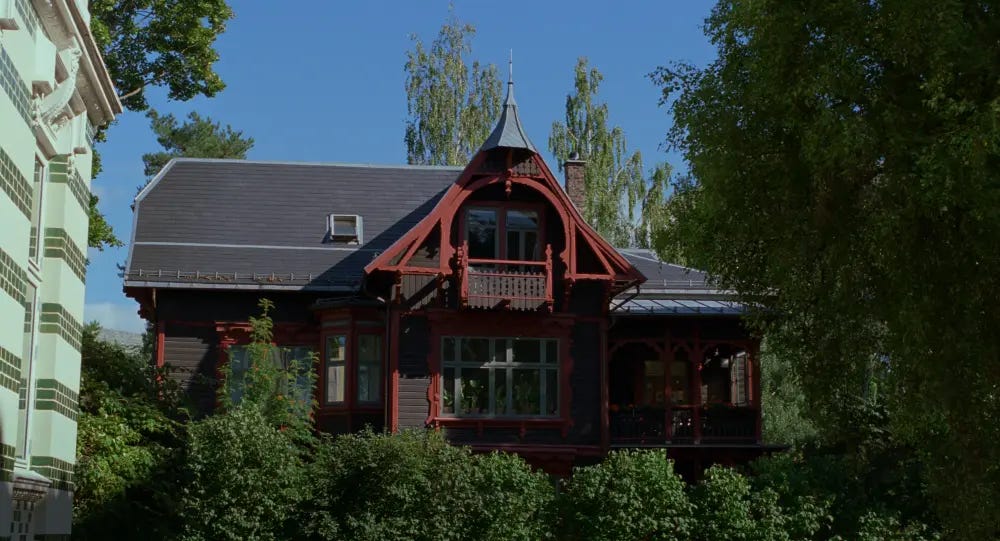
Through Sentimental Value, Trier suggests that our willingness and our ability to create a healthy life outside of our first home—and by extension, our first family—becomes a central pillar of our development, emotional maturity, and happiness. It’s a continuation of the themes he’s navigated in his earlier films, including Oslo, August 31 (2011) and The Worst Person in the World (2021), in which the family home is depicted as, if not the scene of the crime, a significant source of family and self-conflict.2

By showing us the intertwining lives of Gustav (Stellan Skarsgård) and his daughters Agnes (Inga Ibsdotter Lilleaas, whose Best Supporting Actress campaign I’ll be running) and Nora (Renate Reinsve), Trier explores the idea that a home, rather than solely being a place of safety, can also bottle up unavoidable generational trauma, and there may come a point where the only way of escaping said trauma is by physically escaping that home and not just making, but committing to a new one. (A fun holiday watch for the whole fam, btw!)
Spoilers for Sentimental Value (2025) ahead.
Following the set piece3 that is Nora’s childhood essay, we find ourselves in the present, but still at the house. This time, it is the scene of a funeral: Agnes and Nora’s mother has died. A psychoanalyst who raised her daughters on her own after Gustav skipped town, she was the last person to live in the house she once shared with her family. It is this estranged artist father’s surprise appearance at the otherwise sunny funeral that triggers—or highlights, depending on your perspective—the slowly unraveling dysfunction of the family’s three remaining members.
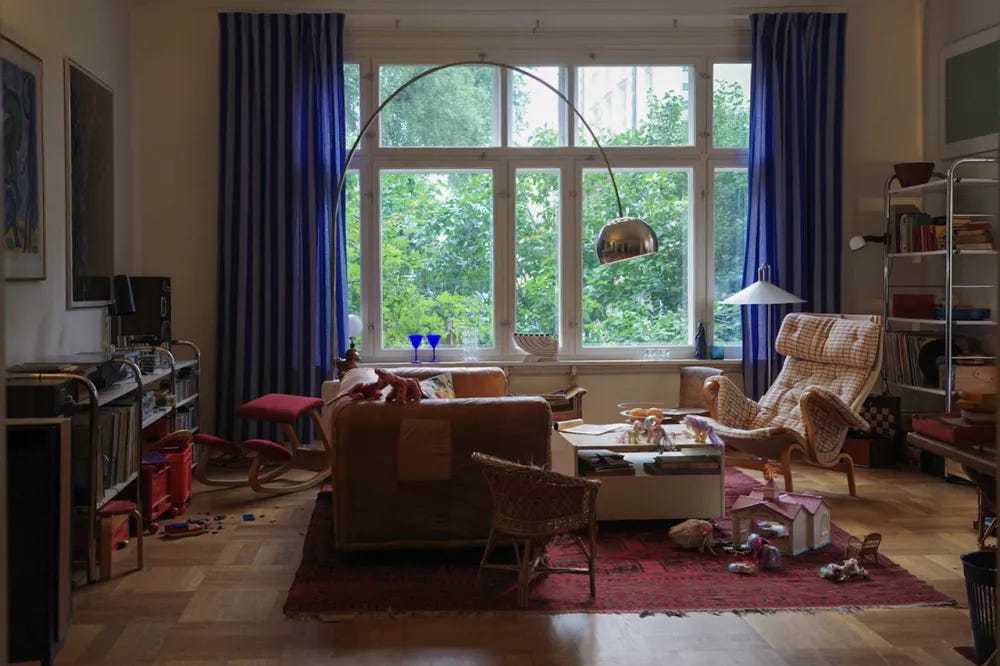
Just like any important character, the house finds itself with a backstory. What we are told is this:
The house is where Gustav’s mother grew up, where she was taken from for anti-Nazi propaganda during the war, and where she returned after being tortured and held prisoner for two years; it is where she became a wife and a mother and where she took her own life when her son was still a small child. In the aftermath of this tragedy, Gustav and his father left Norway (and by extension, the house) and headed to Sweden, where Gustav lived more or less permanently until he in turn became a husband and a father, settling with his wife and children in the same house where his mother committed suicide.4
I mean, not to give mitigating factors too much credit in excusing shitty parenting, but … is it any wonder that he eventually abandons the home (this particular home) and his family? Let’s look at the material!
In such a trauma-filled collection of walls, was there any real hope for a happier alternative? It’s the question we spend a little over two hours pondering.
*
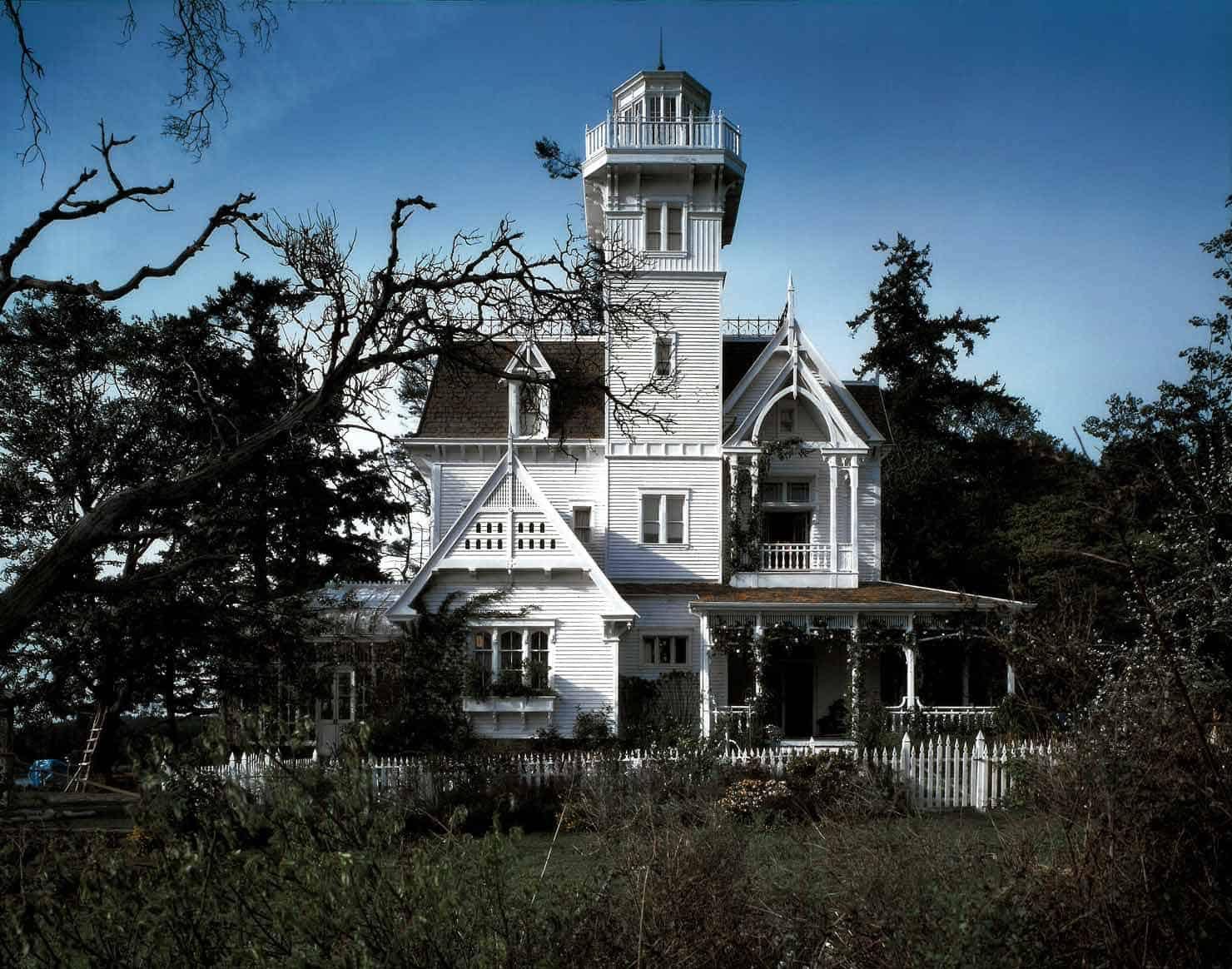
I’ve always been viscerally fascinated by (see: intensely jealous of) people who spent their entire childhoods in one place. There’s something so appealing about faint dashes of growing heights scratched on a fading white wall. To have not just parents and siblings to witness your evolution from child to adult, but a place. To turn to someone at the end of the night and tell them, I’m going home, and know exactly what that means.
But then, I think, maybe to make myself feel better, how hard must it be to outgrow a place like that?
A place that has observed every version of you and that remains within shouting distance means that your worst, lowest version is never too far behind. She can always be reverted to. In this way, a home isn’t merely a shelter—it can be a prison, too. It can hold us back. Don’t we feel a version of that every time we go home for the holidays and temporarily become our bratty teenage selves again? Don’t we hate ourselves a little bit then?
Keep reading with a 7-day free trial
Subscribe to Hmm That's Interesting to keep reading this post and get 7 days of free access to the full post archives.