
everything i read apr-jun '26
the theme was 20th century i fear

Well, folks, we’ve done it again: we’ve reached the year’s halfway point. What have we to show for it? More neuroses. I knew I should’ve limited my Nora Ephron intake during my formative teenage years.
I keep accumulating books at a rate inconsistent with the space at my disposal. A problem for future Clara. From April to June, I read 12 novels—a very satisfying stat of one book a week, I suppose, and what’s a life if not a collection of satisfying statistics?
Looking back, the theme to this trimester was carving out a bit of distance from so-called millennial literature. Of the 12 books I write about below, only three were written within the last twenty years. I think I’ve grown a bit weary of the quiet, impersonal tone often struck by contemporary literature, and lately I’ve been searching for something louder, more dramatic, more committed to the development of a story rather than the curation of a vibe. You’ll likely notice what I mean if you keep reading—my frustration with more recent reads is more evident than I’d have liked. But here we are!
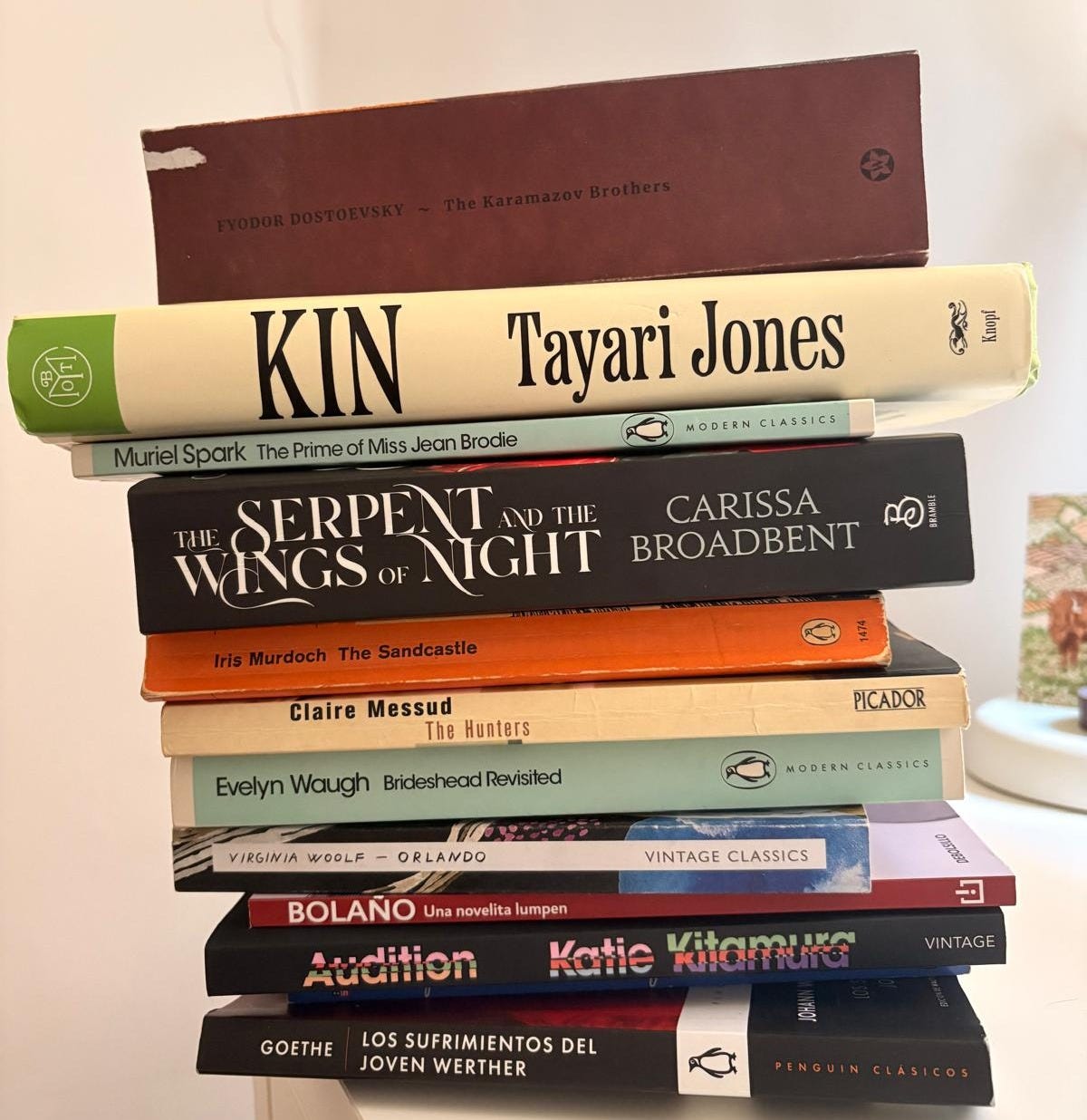
As a preview, here are my April to June novels in the order I read them:
Brideshead Revisited by Evelyn Waugh
Orlando by Virginia Woolf
The Serpent and the Wings of Night by Carissa Broadbent
The Brothers Karamazov by Fyodor Dostoevsky
The Prime of Miss Jean Brodie by Muriel Spark
The Sorrows of Young Werther by Johann Wolfgang von Goethe
The Hunters by Claire Messud
Cannery Row by John Steinbeck
Audition by Katie Kitamura
The Sandcastle by Iris Murdoch
Kin by Tayari Jones
Una novelita lumpen by Roberto Bolaño
My thoughts on the last six are below the paywall, alongside a completed (updated) iteration of this graph, possibly my greatest creation.
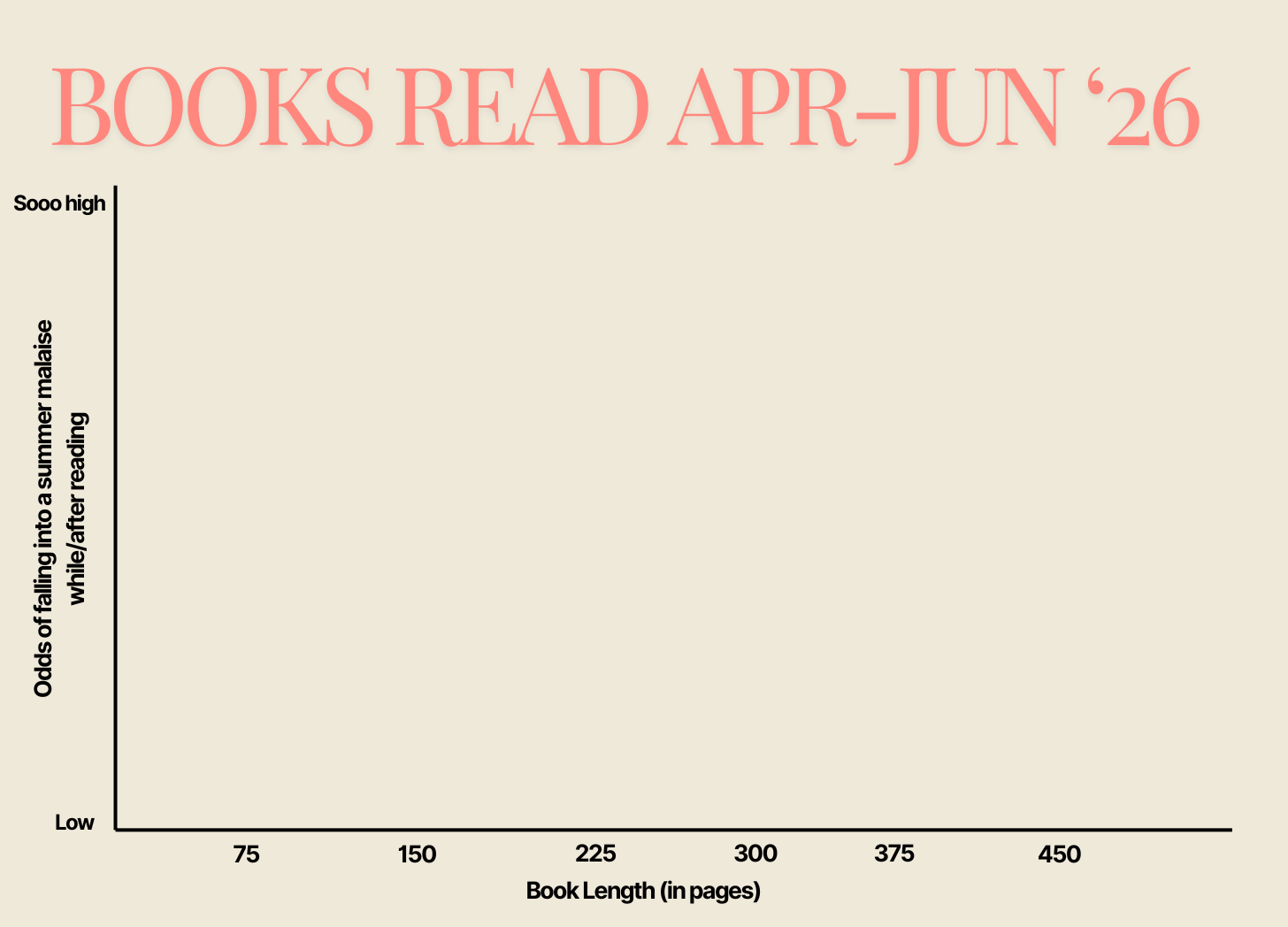
Let’s get into it:
Brideshead Revisited: The Sacred and Profane Memories of Captain Charles Ryder by Evelyn Waugh (1945)
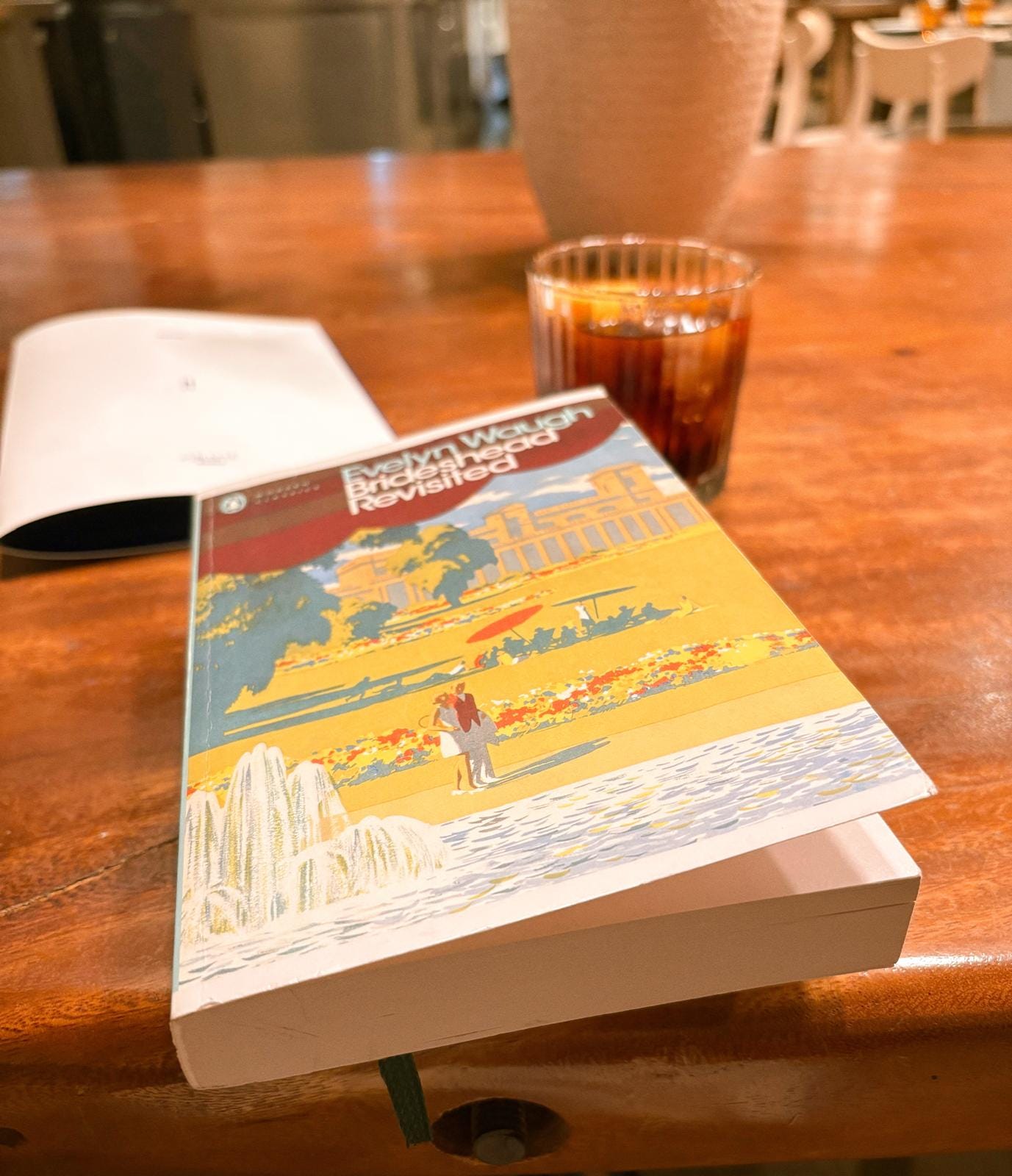
I am soooo glad I read this while there was still a crisp chill to the air. To read Brideshead in the summer would’ve been a waste: this is a novel meant to be read under blankets, preferably beside a warm and/or alcoholic beverage. Like, you expect me to read a line like “I detected a jejune air that had not irked me before” in the summer??? Wearing shorts?? Absolutely not. Would be undignified.
This was comforting in the way that Daphne du Maurier’s Rebecca was comforting, in the sense that reading about upper class denizens’ frequent insistence on wreaking painful havoc on their own lives, often with a deceptively placid pastoral background at our disposal, is never not enjoyable. To read Waugh here is to observe a set of mostly unlikable characters finding ways of repeatedly hoisting themselves by their own golden petards (Because of Society), and then acting surprised when the hoisting is indeed successful.
I don’t want to make this sound like a comedy of manners sort of novel—it’s not. Like I said, it has more in common with Rebecca than with Mansfield Park.1 However, there were so many lines that made me think of this tweet:

Lines like:
All the term I had been seeing rather more of Anthony Blanche than my liking for him warranted. (57)
Rex Mottram exerted himself to make an impression …. One quickly learned all that he wished one to know about him. (141)
In Europe my wife was sometimes taken for an American because of her dapper and jaunty way of dressing, and the curiously hygienic quality of her prettiness … (295)
Apparently he’s one of Lord Copper’s middle-aged young men on the Daily Beast. (343)2
It was essentially like reading about Frasier Crane’s melodramatic exploits (the highest compliment I could pay any work of art).
Orlando by Virginia Woolf (1928)
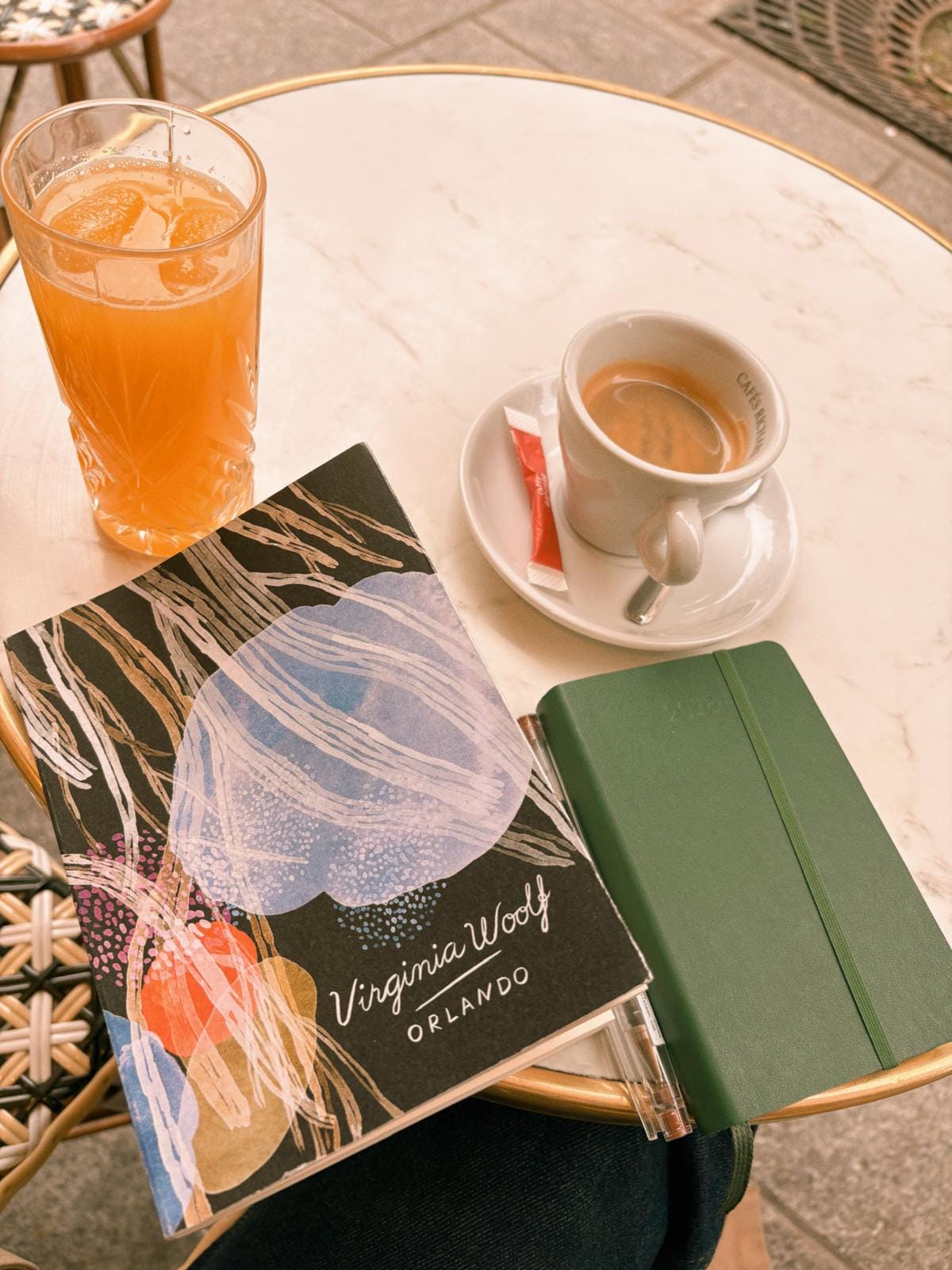
More than my well-documented appreciation for my beloved Modernists, the primary reason I went for this book was Jacqueline Harpman’s Orlanda, which eagle-eyed readers might remember I inhaled and loved at the end of last year.3
Given how Orlanda was inspired by the decades-earlier Orlando, I figured it was high time I took a look at the source material. And as per usual when it comes to Woolf and her pen, I was not disappointed. Even if I weren’t taken with the centuries-spanning tale of our titular nobleman hero, who ages at a mysteriously glacial pace and who eventually—inexplicably—wakes up in the body of a woman, I would find the turns of phrase Woolf employs a worthy enough reason to keep reading. Phrases like “at least a score of poor wretches were drowned by their own cupidity” (41), “With the superstition of a lover” (39), and “Thought and life are as the poles asunder” (191).4
And then there’s the inevitable comparisons to Clarice Lispector that I simply cannot, for the life of me, help making. How can I, when I read lines like “For what more terrifying revelation can there be than that it is the present moment?” (213) dovetail so nicely with “She wasn’t obliged to follow the past and with one word could invent a course of life,” from Lispector’s Near to the Wild Heart, first published a mere 15 years after Orlando?5
Anyway. Loved this. Every year I toy with the idea of becoming a Woolf completionist; maybe this is the year I finally make a serious attempt.
The Serpent and the Wings of Night by Carissa Broadbent (2022)
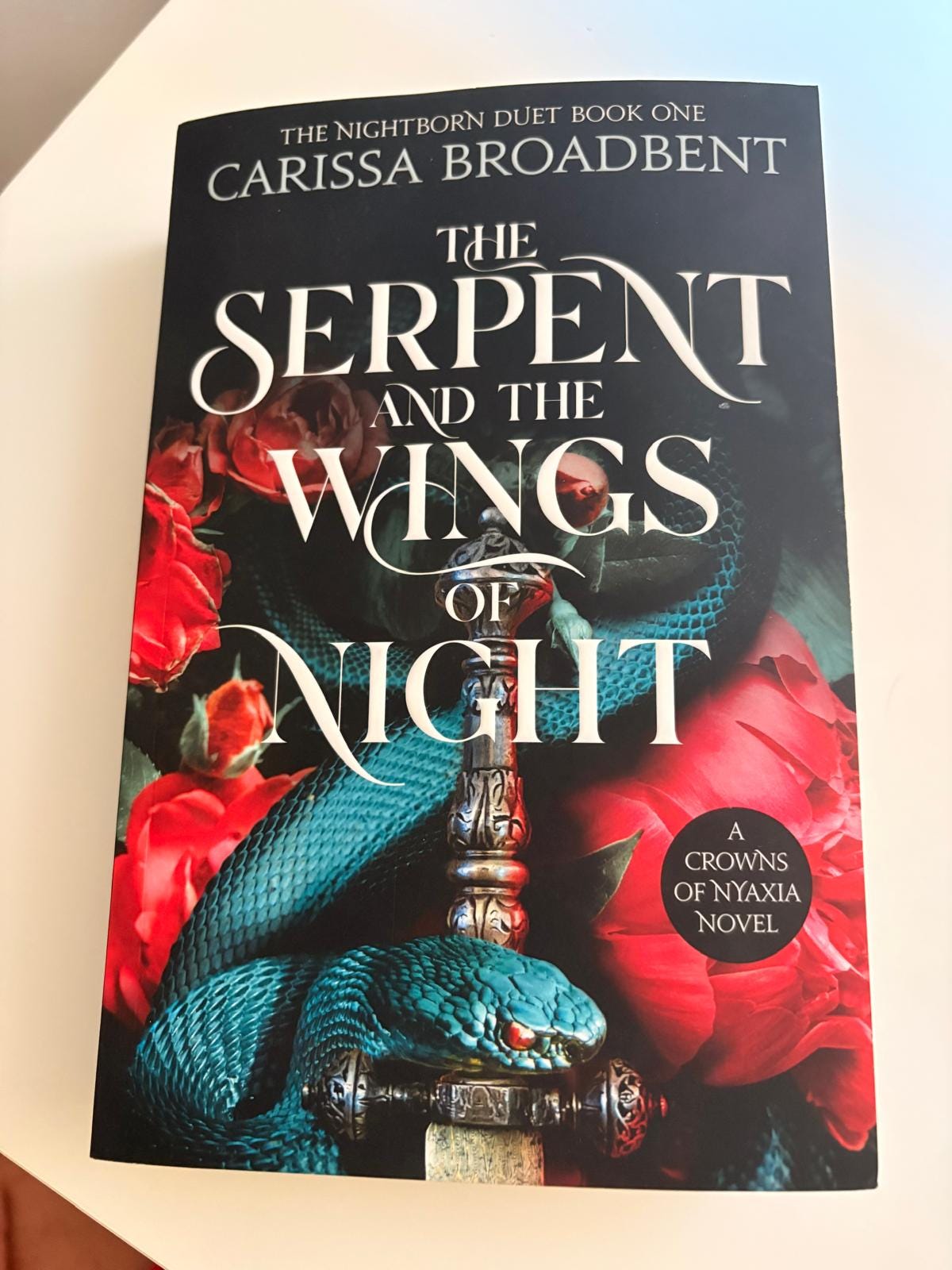
This was a birthday gift from a friend with whom I share a weakness for the occasional romantasy novel (sue me!!!) and it was, predictably, a delight. I love a trope, I love an unrealistic heroine coupled with an equally unrealistic love interest, I love losing an entire afternoon to turning 400 pages of world building and smut and unnecessary subplots that I know for a fact everyone also wishes they could skip, and I love texting friends after to inform them that yes, the smut was good. Do I remember any significant details about this book? Absolutely not. Would I read it again? Most certainly.
The Brothers Karamazov by Fyodor Dostoevsky (1879) (trans. by Constance Garnett)
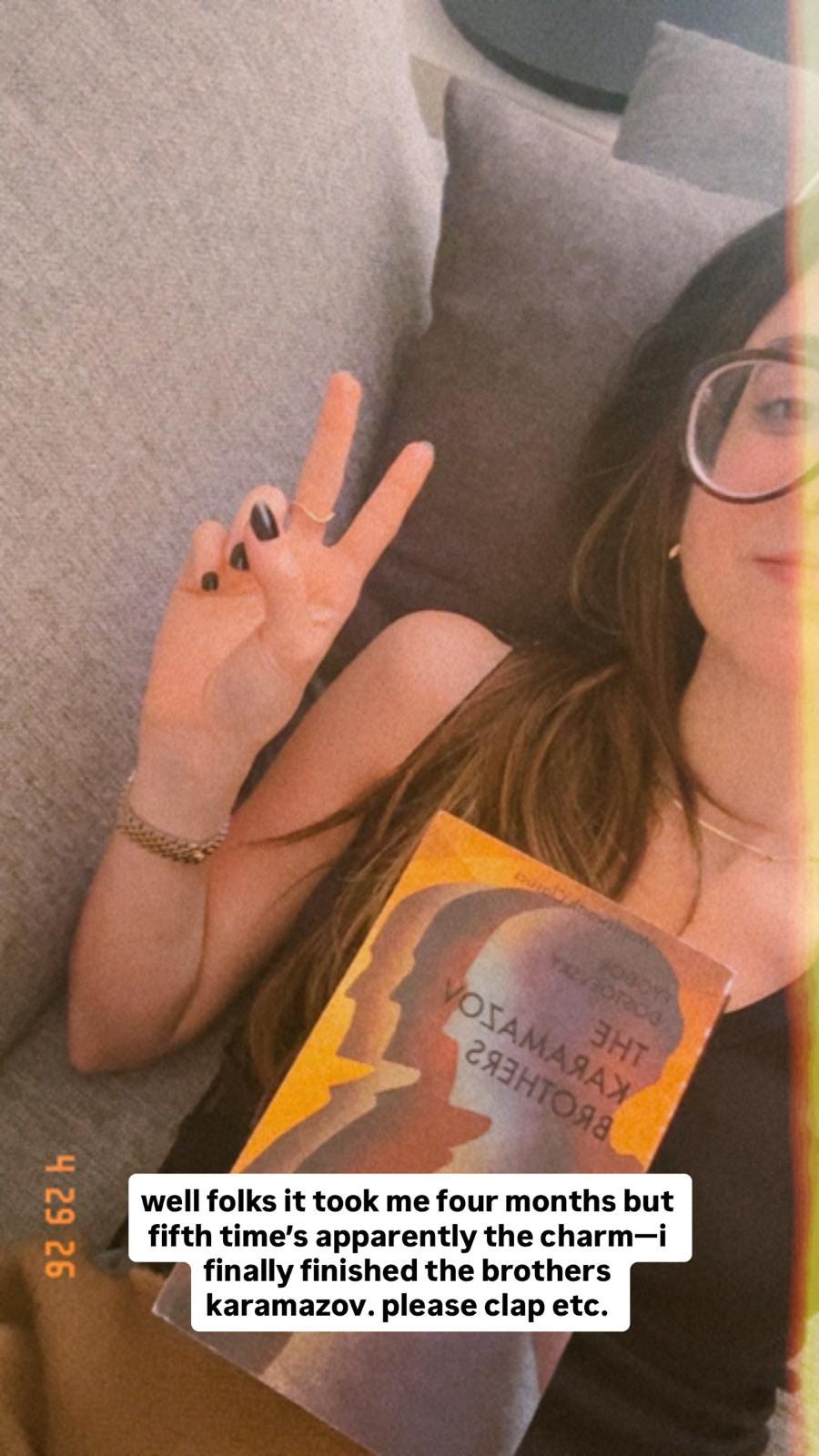
Have we not already discussed this ad nauseam in 2026? I’m tired of talking about it. Like, okay, I came, I saw, I conquered, I finally finished this damn book. They didn’t think I could do it and yet here we are. Am I glad to have checked it off my personal books to read before I die list? Sure. Will I ever read it again? Pretty sure that’ll be a nyet from me, babes.
The Prime of Miss Jean Brodie by Muriel Spark (1961)
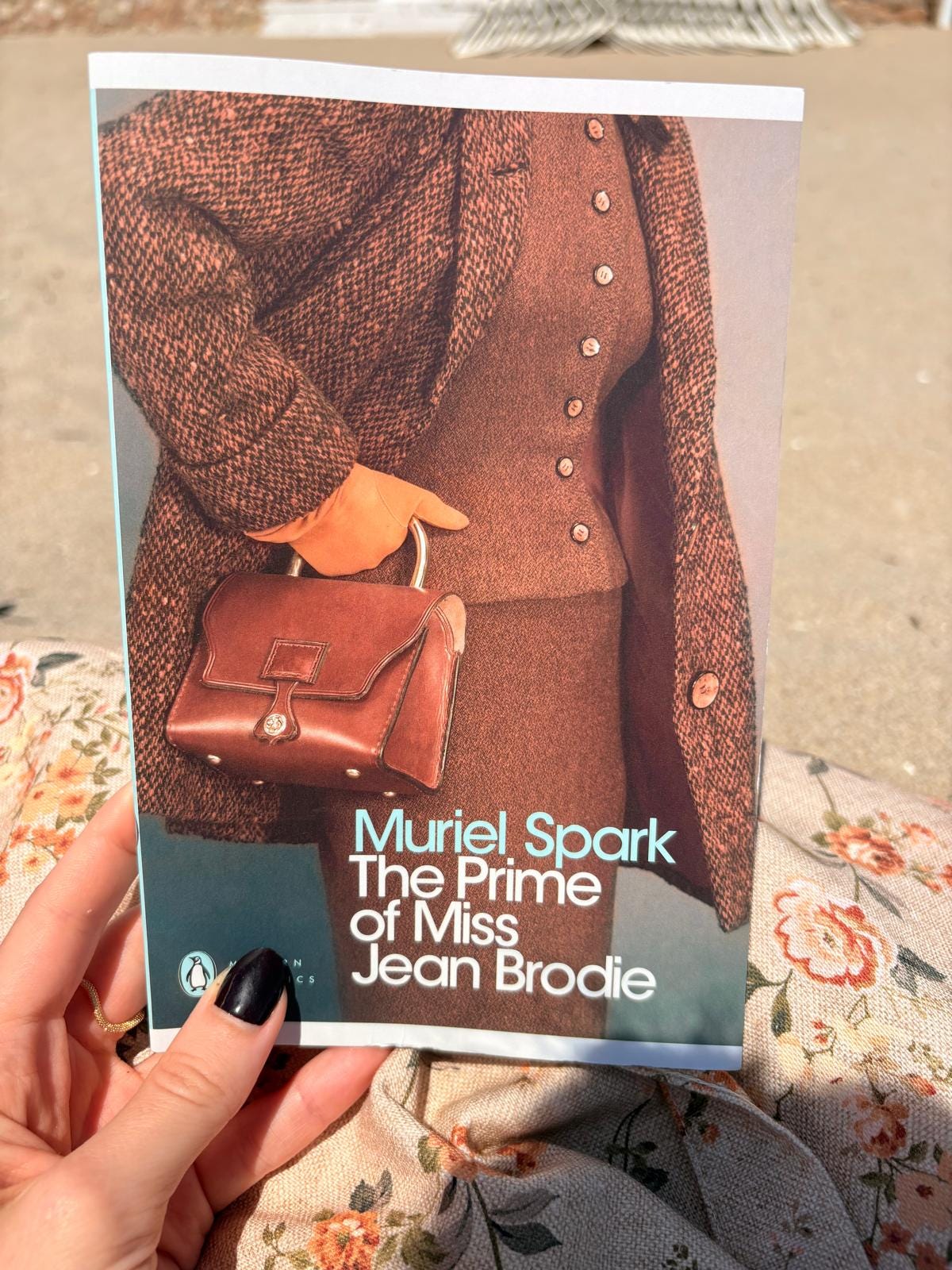
I included this one in June’s “shortish books to bring with you on vacation,” and it’s because I had just finished it following a few reading sessions at the beach. It’s not flawless, but it is a perfect little afternoon read because Spark, as it turns out, was a little freak (complimentary). You come in to Miss Brodie thinking the titular teacher will be some sort of prim schoolteacher and very soon realize that no, actually, with more resources at her disposal Miss Brodie could lowkey have become a deranged cult leader-in-training. Inspiring!
This is my third Spark read and my hypothesis that she was absolutely batshit crazy (complimentary) continues its journey into solid theory.
The Sorrows of Young Werther by Johann Wolfgang von Goethe (1774) (trans. by José María Valverde)
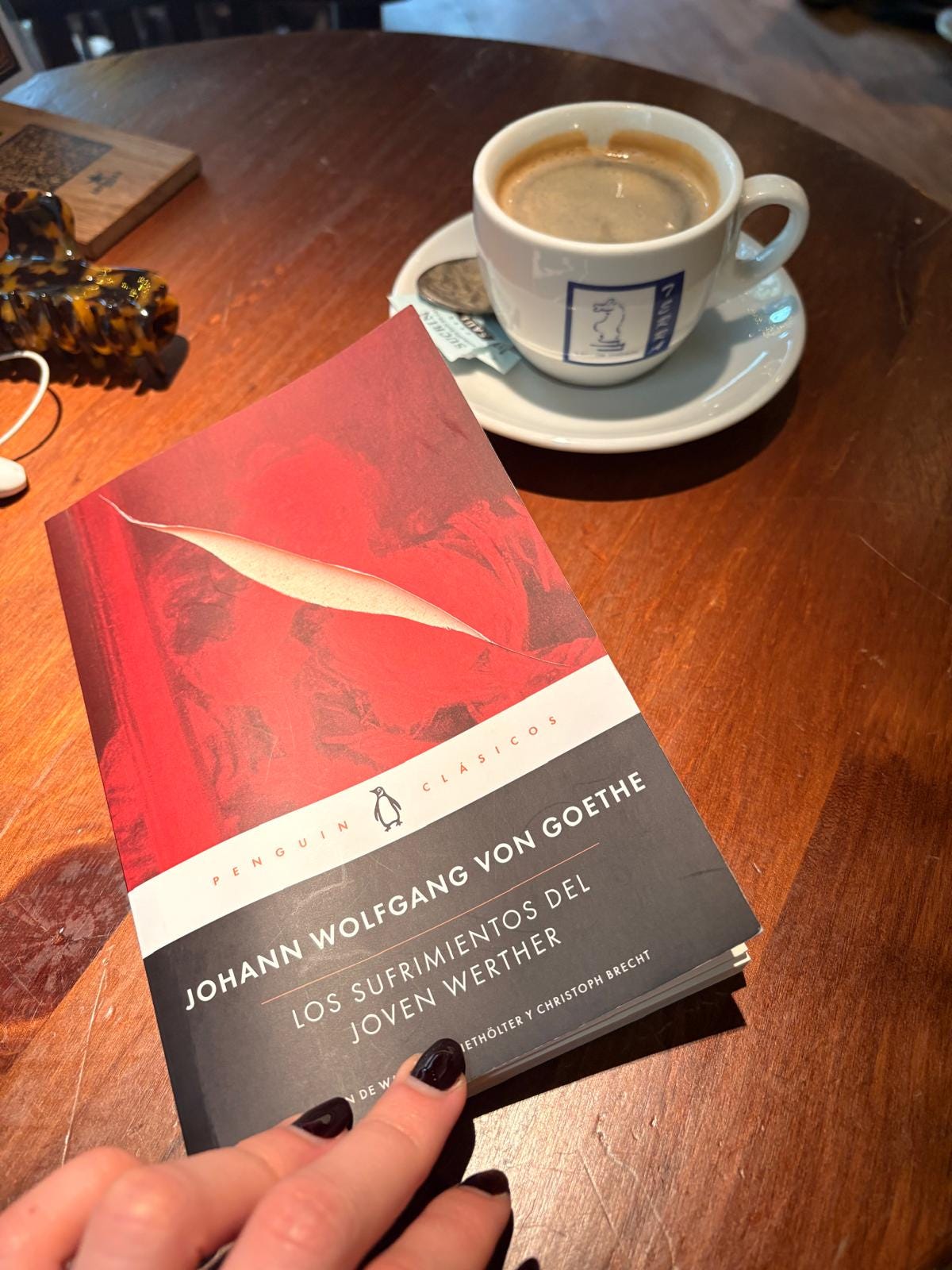
I read this because a philosophy professor told me to. Months ago, I watched this lecture from Dr. Michael Sugrue, and his appreciation of Goethe’s weird little tale was such that, when days later I walked into a bookshop to kill time because wouldn’t you know it, my chronically late friend was once again late, I gasped upon catching sight of the Spanish translation in one of the little swiveling columns of Penguin paperbacks. I bought it and sat on a bench to read and wait for my friend.
if you’ll indulge me with a quick tangent on translations
Goethe wrote this in German and I first read the Spanish translation (by José María Valverde), but I was looking at the English translation (by R.D. Boylan and in the public domain given the 1774 publication date of it all) to share some quotes from the novel with you. It’s always interesting reading translations in a couple different languages, because you can see how the syntax of the translated work alters the meaning; for instance, towards the beginning of the book I underlined the following line:
Estoy contento y feliz, y, por tanto, no soy un buen cronista.
Which in English I’d translate as something like:
I am content and happy and, as such, have become a poor historian.
But the English translation on Project Gutenberg of this same sentence is as follows:
I am a happy and contented mortal, but a poor historian.
Do you see how it’s different? The cause and effect that the Spanish translation creates is neutralized in the English translation, such that the character’s poor chronicling is not due to his happiness or contentment, but simply a trait that happens to coexist alongside the happiness and contentment.
Because Of Who I Am As A Person, I did look up the original German (in Projekt Gutenberg, natch), which reads:
Ich bin vergnügt und glücklich, und also kein guter Historienschreiber.
Wow, Clara, I hear you say, I didn’t know you spoke German. I do not. Can you imagine how annoying I’d be about that lol. I am, however, unspeakably stubborn. And do you know what the several different translation systems I ran the sentence by concluded? That:
I am cheerful and happy, and therefore not a good historian.
So the Spanish translation, then, is closer to Goethe’s meaning than the English one. Much as it pains me to say it, this is why it made sense for Pete Buttigieg to learn Norwegian (?) to read that one book, btw. It really makes a difference, the ability to interpret the author’s original words instead of having to parse through a translation that by definition, no matter how gifted the translator(s), separates you from the original. I’m not saying I’ll be learning German anytime soon, but I do want to double down on my Portuguese so I can properly read Lispector (see above).
translation tangent over
Anyway, this was a profoundly melodramatic book, in the vein of Dante’s Vita Nuova in the sense that our protagonist falls madly (emphasis on madly) in love with a woman and decides to let it ruin his life.
We start like this:
That she loves me! How the idea exalts me in my own eyes! And, as you can understand my feelings, I may say to you, how I honour myself since she loves me!
And end as such:
I possess so much, but my love for her absorbs it all. I possess so much, but without her I have nothing.
Bit of a perfect summer read, actually: brief and insane.
Keep reading with a 7-day free trial
Subscribe to Hmm That's Interesting to keep reading this post and get 7 days of free access to the full post archives.