
on sports and advertising
(part 1)

To watch Jannik Sinner’s post-match ablutions is to watch a routine almost too intimate to be live-streamed. The shedding of his custom-made sweat-soaked shirt and donning of a clean and coordinating Nike zip-up, retrieved from somewhere within the bowels of his tennis bag, followed by the clasping of a sparkling Rolex around his wrist, along with a quick check to confirm the timepiece is not caught below the cuff of the aforementioned zip-up—it’s a ritual as carefully orchestrated as the pre-serve shuffle, adjustment, and tap of racket to sneakers to shake off the red clay. A fascinating display. And one largely for the benefit of the brands sponsoring him to the tune of millions of dollars.1
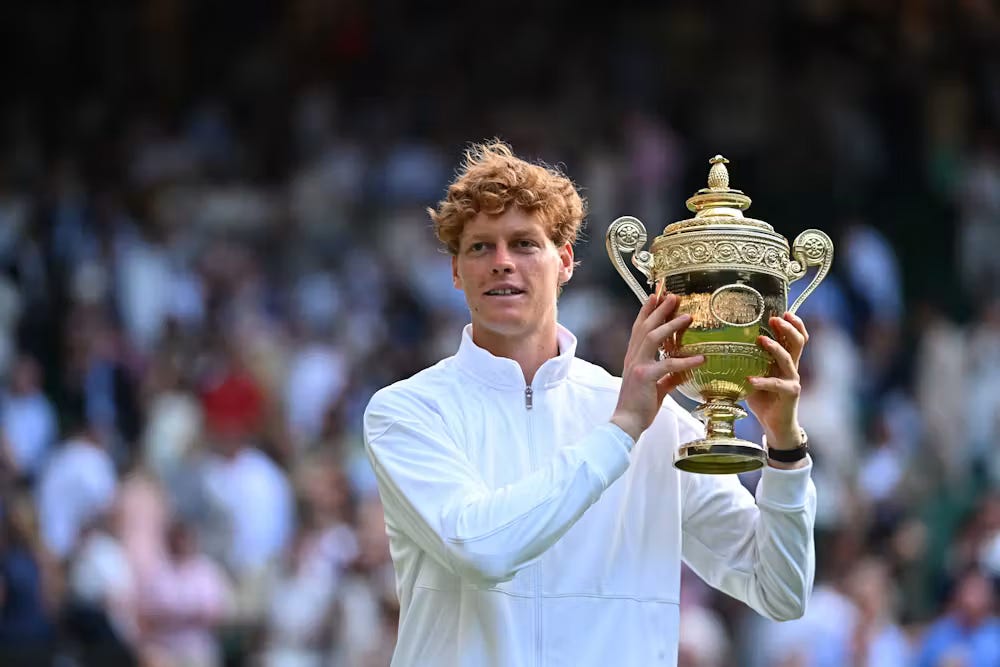
It’s not just now, and it’s not just the number one seed.2 Professional athletes and teams have been sponsored by sports apparel companies for a long time. But lately, the sponsorships have been getting out of control. Over the last few years, they’ve begun to take more of a starring role rather than lying discreetly in the background.
Brands in sports are not novel, of course. I know that; we all know that. The first time I remember becoming aware of the intricate post-match pre-interview preparation routine was watching Roger Federer’s jaunty little off-white sports coat following his victory at Wimbledon in 2006. I went down a deep YouTube rabbit hole that I’m pretty sure concerned my coffee shop neighbor, and it looks like the year prior, Federer’s only sponsored addition was a watch. No blazer for Wimbledon in 2005. Just vibes and sweat. The way sports should be.
Somewhere in the mid-2000s, then—incidentally, during logomania’s heyday—brands decided to up their stakes. To leverage the attention athletes were drawing from ever-growing audiences and engage in a little additional zhuzh. As a treat. Make every fan a future consumer of as many items and brands as possible. And why not! In 2006, people were famously buying things! More was more!
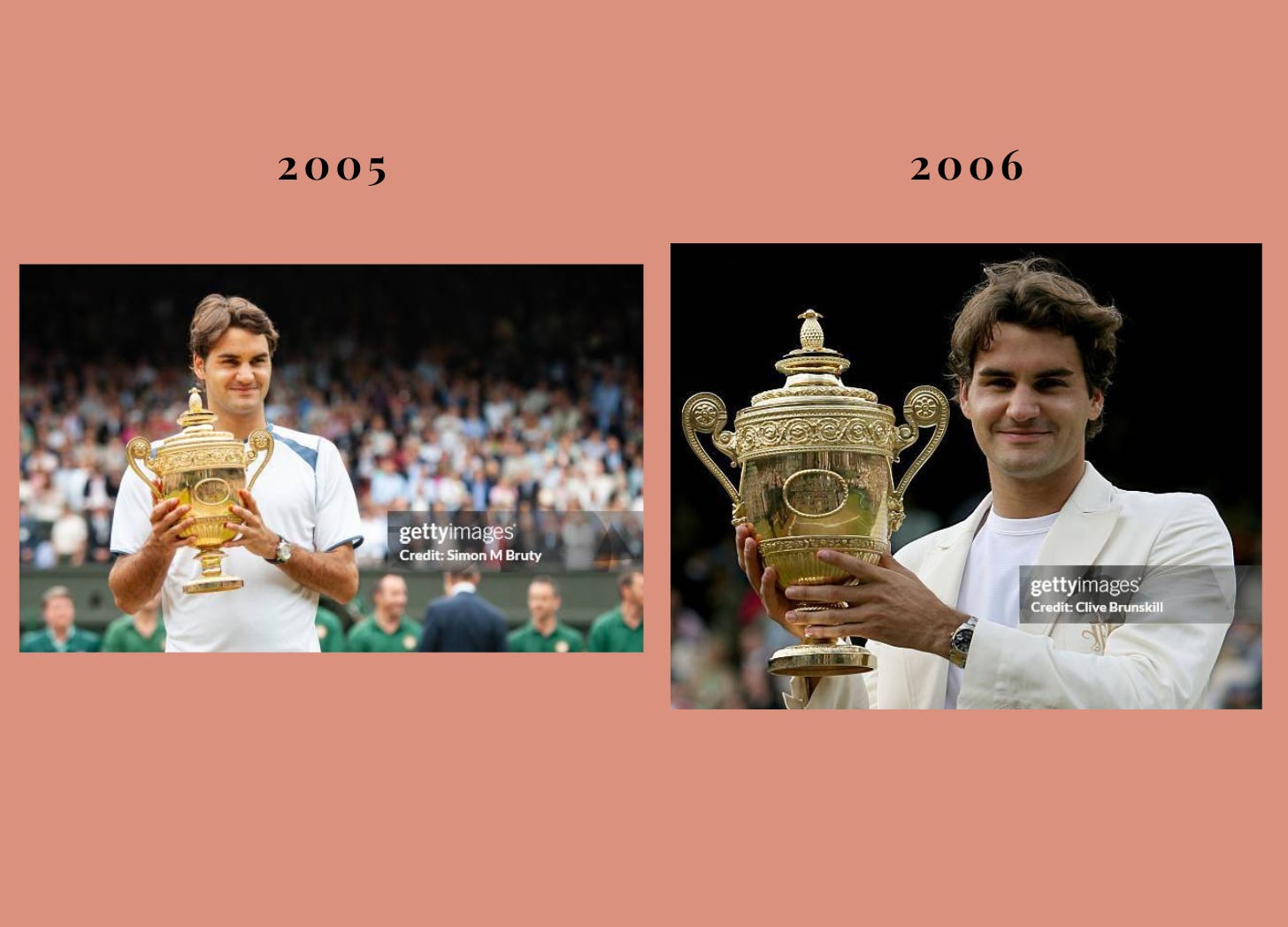
If you’ll allow me a spot of wild conjecture and generalization, it does make sense that in the years of excess prior to the global financial crisis3, Nike, in its infinite wisdom, decided that it was not enough for a player to wear their kit—their one measly kit, peasant stuff, really—on the court. No. A costume change was necessary. Roger Federer would now have to pack a cunty sports coat beside his extra rackets and protein drinks, and he would wear it, along with his Rolex, while lifting his trophy in front of whatever royal family member was around that day. One wonders how much more he was paid for this. One hopes it’s a lot—the very idea of putting on clean clothing over a four-hour build-up of sweat … in front of thousands of people … well, it should be expensive, is all I’m saying.
I was on a non-date recently when the subject of sports and advertising came up. Naturally. It’s either that or AI, these days.
Keep reading with a 7-day free trial
Subscribe to Hmm That's Interesting to keep reading this post and get 7 days of free access to the full post archives.